
One reader left a comment asking for helpful hints for starting a digital photography and video class.
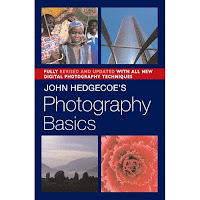
I also had to start the digital photography class for our county and I was feeling lost until I purchased John Hedgecoe's Photography Basics and his New Manual of Photography (mentioned earlier in this blog "Essential Photography Books"). I basically had my students do projects based on finding shapes, line, pattern, texture, light direction etc. as he suggests in his books. He also covers topics, like flowers, portraits, etc. Then I would add project ideas that I would get by reading other books and keeping up with online sites. (I've mentioned several in earlier entries in this blog.) John Hedgecoe also wrote a great book on filmmaking that I had in college, but I haven't checked if it is still in print, or if he has a video version. I only teach one unit on video using iMovie and I mention good video examples for a starting point in an earlier entry.
I think the key is to remember that you are approaching digital photography and video as art instruction. There are so many digital photographers and Photoshop experts who do not have a background in art and you can tell from their writing that they approach it as a technology challenge, not an art challenge. In my blog I try to focus on the ones who approach it as an artist. So, be careful what books you buy and what websites you read. Remember to cover the art elements and principles of design as well as the concept and purpose of expression. I make the technology part secondary, and they learn it as they go, not all at once.
I always start the year with a History of Photography lecture based on http://masters-of-photography.com (the dashes are important because there is another site without them). That site not only has examples but great articles about each photographer explaining their approach and motivation. It helped me remember a lot from college history of photography classes as well (a long time ago). The students love that lecture because they feel like peeping toms to the past. And, of course, if you have to justify that you tie other subjects into your art classes, well, this one is easy since so much of our nation's history is documented in these photos. Since I love history, I ask them to tell me what they know about the subject of the Dust Bowl, the Industrial Revolution, etc. that they see evidence of in the photos.
I try to introduce visual ideas during the lecture. For example, looking at Dorthea Lange, tell her story but also ask questions: "Did she ask her subjects to smile?" "What angle to the subject was she when she took this?" "What would have happened if she had stood 10 feet to the left? The diagonal line would have become horizontal and that is no where near as interesting." etc. This lecture is important because it helps make the students more comfortable with what I am expecting, before they ever have to turn in a project. Before I give them their first assignment, they already have a sense of the big idea of photography as an art form, that it is as much about the composition and lighting as it is about the subject, and that there is a boring way to represent the subject and a more intriguing way. It helps them understand the difference between snapshots and photography as an art form.
I highly recommend buying the two Hedgecoe books . They made my life a lot easier when I was asked to write the digital photography curriculum and my last photography class had been in the 70s.
Also, my first digital photography shooting projects of the year are: Photographing a Subject from Several Angles, and Shadows as the Subject (this one helps them think abstractly about big shapes instead of the subject). When school starts up again, I will show student examples of these early projects.
I have a collection of some beginning Photography lessons and advice for organizing the class on my Teachers Pay Teachers site. (This is the link to the first set, there are several others as well.)
Showing posts with label John Hedgecoe. Show all posts
Showing posts with label John Hedgecoe. Show all posts
Tuesday, July 22, 2008


Monday, March 31, 2008
Essential Photography Books

When I was first given the opportunity to teach digital photography, I had to head to the bookstore. My last college photography class had been 1979. I had taken 3 levels of photography and had worked as a photojournalist in my mid-20s, but remembering how I was taught the essentials was packed away somewhere in the attic section of my brain.
My digital photography curriculum is a combination of photography essentials (composition, lighting, point-of-view, expression, topics) and Photoshop. During the warm weather months we focus on those photography topics (which would apply to film as well) and then, obviously, during the months with nasty weather, we focus on Photoshop and studio photography. And, as you probably have discovered, there are no books that I have run across that cover both topics well, which is understandable. And for that reason, I do not use a text book.
The majority of the photography part of the curriculum came from two fantastic books, John Hedgecoe: The New Manual of Photography: A Definitive Guide to Photography in Every Format, and his more basic one, John Hedgecoe's Photography Basics. I recommend both, because you can use a lot of the chapters from his Basics directly in the classroom. The Definitive Guide takes more careful thought about what is too advanced or non-essential for your students. I remembered him from college. I loved his book on filmmaking. He writes so beautifully and from the perspective of an artist, not a tech geek. And, they are visually exciting books, as well.
Here are just a partial list of sub topics in his chapter called, "The Art of Good Photography Composition" (Definitive Guide): The selective eye; placing the subject in the frame; using diagonals; circles; frames within frames; selecting a viewpoint; linear perspective; using shadows; texture, pattern, and quite a few more. He has another complete chapter devoted solely to color.
So, if, like me, it's been a long time since you took that photography class, consider these two books. There are many others that cover more specific or advanced photography topics, but these are the best essentials for the art of photography.
Subscribe to:
Comments (Atom)


